From nursing visits to bereavement support, every service is coordinated by one interdisciplinary team.

Every service, in detail
We take time to listen, explain the process clearly and work with patients, families and healthcare providers on care centered on each person's goals.
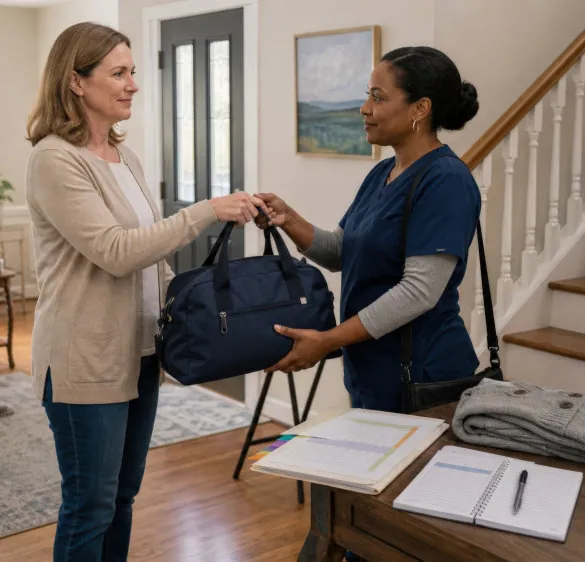
Skilled nursing visits focused on comfort, symptom management and patient education.
- Your nurse evaluates the patient’s condition at each scheduled visit.
- Symptoms are assessed and documented with careful attention.
- The care plan is reviewed with the patient and family.
- Education is provided as healthcare needs change.
- The physician is updated promptly about significant changes.
During each visit, the nurse checks comfort, answers questions and helps families understand changes they may notice. Care plans are adjusted with the patient’s physician and the hospice care team.

Medications related to the hospice diagnosis are coordinated to support comfort and symptom management at home.
- A physician reviews medication needs and treatment goals.
- Prescriptions are coordinated with a trusted pharmacy for prompt fulfillment.
- Medications are delivered to the patient’s chosen care location.
- Your care team explains schedules and how to give each medication.
- Adjustments are made as the patient’s needs change.
Your care team monitors how medications are working and talks with the attending physician when changes may improve comfort. Families receive clear instructions and guidance whenever questions come up.

Essential equipment and supplies are arranged so patients can remain safe and comfortable.
- Equipment needs are evaluated during the assessment visit.
- Supplies are ordered for individual care requirements.
- Equipment is delivered to the preferred care location.
- Staff demonstrate safe setup and everyday use.
- Equipment is updated whenever needs change.
Equipment and supplies are coordinated to support the care plan. Your hospice team explains how to use them safely and answers practical questions along the way.

Practical education helps families feel prepared to provide daily support with confidence.
- The team explains daily care routines with simple instructions.
- Caregivers practice techniques with professional guidance.
- Written resources reinforce important caregiving information.
- Questions are answered during visits and phone calls.
- Education is updated as the patient’s condition changes.
Every family learns at its own pace, so education is practical and supportive. The goal is for caregivers to feel informed, comfortable and confident in everyday care.

Hospice care is coordinated with facility staff to support residents with care focused on comfort.
- The care plan is coordinated with facility healthcare professionals.
- The hospice team visits according to the patient’s needs.
- Regular communication is kept with family and facility staff.
- Symptoms are monitored through ongoing team collaboration.
- Care is adjusted whenever health conditions change.
Our professionals work alongside nursing home and assisted living staff to complement existing care. Families stay informed and can bring questions to the hospice team at any time.
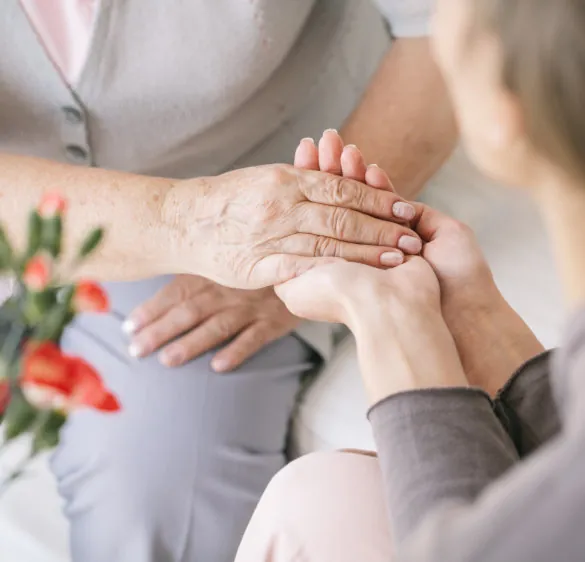
Compassionate guidance for families before and after the loss of a loved one.
- Emotional support begins before a loved one’s passing when appropriate.
- Grief resources are shared based on each family’s needs.
- We stay in touch with the family after the loss.
- Support is tailored to each person’s way of coping.
- Community resources are offered whenever they may help.
Grief affects everyone differently, and support is offered with understanding and respect. Families are welcome to reach out whenever they need encouragement or more resources.

Trained volunteers offer meaningful companionship that complements the hospice care team.
- Volunteers are matched to patient preferences whenever possible.
- Friendly visits encourage conversation and connection.
- Companionship is provided alongside professional hospice care.
- Family caregivers receive occasional relief during visits.
- Activities respect the patient’s comfort and wishes.
Volunteer visits provide companionship and emotional support rather than medical care. Each visit is planned around the patient’s comfort, interests and preferences.

Temporary relief so family caregivers can rest and recharge.
- Care needs are reviewed before respite begins.
- Temporary care is coordinated for scheduled relief periods.
- Patient comfort remains the focus throughout respite.
- The family is updated during respite when needed.
- Regular home care resumes when respite ends.
Rest helps caregivers keep supporting their loved one over time. Respite care keeps care continuous while giving families space to attend to their own needs.

Short term inpatient care helps stabilize symptoms that need more intensive attention.
- Symptoms are assessed to decide whether inpatient care is needed.
- Care is coordinated promptly with an appropriate facility.
- Experienced professionals provide intensive symptom management.
- The patient is monitored until symptoms are more manageable.
- A transition back to the preferred care setting is planned.
This level of care is temporary, for symptoms that cannot be safely managed in the current setting. Once symptoms improve, the team coordinates a smooth return to the preferred place of care.
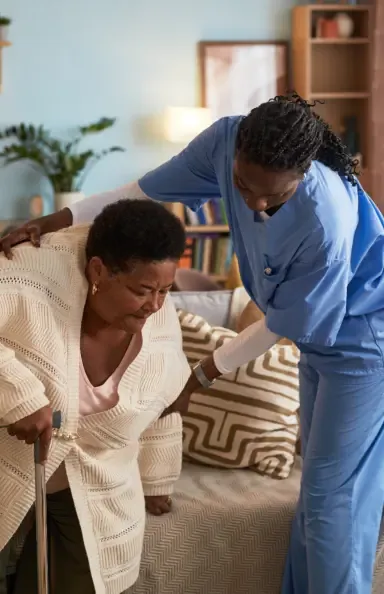
Guidance, education and practical help so loved ones can keep caring for the patient in a familiar place.
- Certified hospice aides may assist with bathing and personal care.
- Aides can help with light household chores.
- Support with meal preparation is available.
- Family caregivers receive guidance and practical education.
- Supportive services are matched to each plan of care.
Our interdisciplinary team works with patients, families and healthcare providers to decide which supportive services fit each person’s needs and hospice plan of care.
You don't have to navigate hospice care alone. Whether you have a question or are ready to begin, our team is here to help.
Request a care consultation